

Anthropic Won the Market By Embedding AI, Not With a Better Model
Want market share? Focus on non-tech worker loyalty, not just the devs

I’ve primarily only written about different parts of the Data Ecosystem in this newsletter. Now once a week, I want to share shorter perspectives on the ever-evolving Data & AI industry and practical tips on how to use AI (that isn’t fluffy BS). Hope you like it and reach out if you have any topic suggestions!
Read Time: 8 minutes
I’ve said this in a previous article, but Anthropic changed the game with Claude Code and Cowork.
It wasn’t just that it was a better model. It was this that changed how people worked with AI. Then they capitalized immediately by adopting that new approach at work and embedding it within enterprise organizations.
Meanwhile, other companies are still playing “who has the best model.”
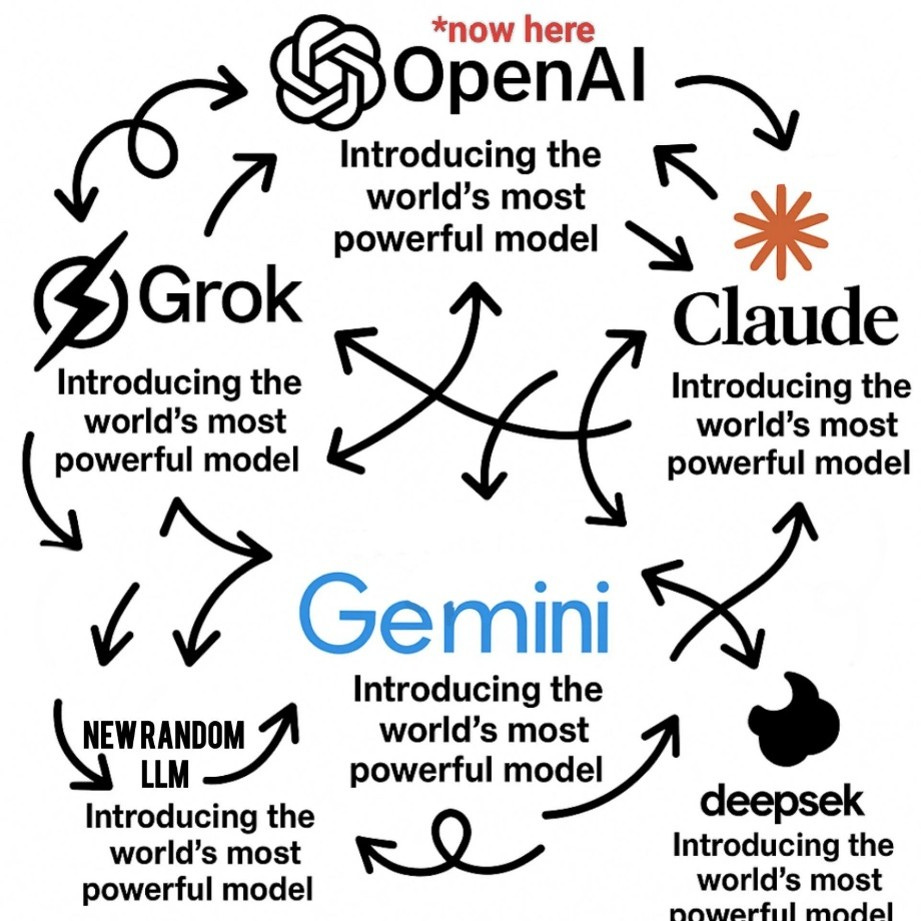
But the model is not the moat. The moat is whether the AI is embedded in how you actually work, or whether it’s still a chat window sitting next to your work, waiting for you to remember to use it.
And that is what matters right now in this world of AI.
The Embed Playbook
Most companies nowadays, even in the AI space, have taken the freemium model to attract customers. They offer the product for free, set a tier and a cap on it, and build enough loyalty that people end up paying for the next tier or additional capacity.
Anthropic took the same approach, but then took a page from the Apple and Microsoft playbook.
Let’s start with Microsoft Office.
It is a pretty shit product. Nobody really likes it, especially Teams, but tools like Excel, PowerPoint, and Word are now mainstays in most large organizations, even the ones that use Macs. What Microsoft did well 30-odd years ago was embed those products into how people work in an office. By the mid-90s, Office was 90% of business productivity software, especially as Microsoft bundled Office with PC sales, locking OEMs in by shipping its product and further embedding itself.
Apple ran a similar play, but from a consumer perspective. They launched an ingenious product in the iPhone and started locking customers into the ecosystem. Think iMessage, Apple Music, the App Store, and even the unique charging cable.
All this ensured that Apple was an embedded part of those people’s lives, from communication to listening to music to everything. That is how they’ve now become one of the most valuable companies in the world, because you just have to have an iPhone now (in North America at least), even if the Android phone may be better.
And look, this isn’t easy to do. Microsoft and Apple both spent millions on building customer relationships, R&D, marketing, sales, etc. But if executed well, this strategy leads to long-term success because people are bought in and can’t imagine functioning without the product or service.
The AI Acquisition Approach
Now let’s look at the AI industry, specifically foundational models. As I mentioned, every company took a try-and-learn, freemium approach, allowing people to work with their tool, chat with it, and get a feel for the power it delivers.
But sticking power wasn’t there. They used an online interface where they could switch between models, and the context within each model wasn’t necessarily super powerful yet.
The first to crack this nut was Cursor, which built its embedded coding tool into the workflows of developers and data professionals. When Cursor came out, it exploded for that very reason. Yes, it was a great model with high-quality outputs, but the fact that coders couldn’t work without it after having used it for the first time was a problem. Therefore, a premium membership was a no-brainer.
But coders aren’t the end game here. They are the early adopters to these technologies and the ones that usually test them out, but they also represent a very small part of the market.
No, if you want to be successful as an AI company and own the market sphere in the organizational context and setting, you want to take a Microsoft play and embed yourself into corporate workflows, and that is exactly what Anthropic did with Claude Cowork.
Anthropic’s AI Embedded Strategy
I see Anthropic’s dominance in AI happening in four stages:
Introduction of a very good model
Build Claude Code like Cursor, but better.
Create Claude Cowork for less technical individuals.
Target Enterprises
First, I know the Claude model isn’t the top of every leaderboard anymore. ChatGPT 5.5 and Codex have surpassed it (well, according to ‘experts’ and as of May 2026), and there are many open-source models that deliver a similar spec. BUT, at the time, when Claude Opus 4.5 was released a few months ago, it was the best model out there, and people flocked to it.
Next Anthropic released Claude Code, similar to Cursor in that embedded AI into how the individual was working. Claude took it one step further and went into the terminal, reading your codebase, running your tools, making your edits, basically giving you an AI assistant inside what you do.
This changed the game. It was no longer chatting with AI. It was telling you what to do from a chat interface based on your daily activities.
While people are now complaining that Claude Code does not live up to the other models, Anthropic is still benefiting from its other product, Cowork. Cowork is the same idea, but for everyone who isn’t a developer (which are most people).
Cowork introduces the idea of embedded AI in a non-technical way. It democratized the technology in the way it was always supposed to be democratized: embedding AIinto how people actually work, not as a place they visit to ask questions. These people don’t know what a Markdown file is. These people don’t even know what an agent is, even though they might think they’re building them.
These people just want to chat, connect with their existing tools, and have smart playback from their AI engine. The key point here is that these people—who probably make up more than 95% of the white-collar workforce—dwarf the number of devs and data people.
And now people are just vibe coding stuff, and companies are rethinking whether they should have software developers or data people (they should, as these vibe-coded apps are breaking all over the place and shouldn’t be trusted).
By now, Anthropic has introduced an embedded play into the white-collar workforce, but the next step was the nail in the coffin: courting enterprises with deals to lock in their tooling. According to VentureBeat:
“Anthropic has crossed a $30 billion annualized revenue run rate, up sharply from roughly $9 billion at the end of 2025, and that growth is being driven largely by enterprise demand.”
They proved that employees wanted to use Claude Co-Work, and then they signed deals with companies that are now building workflows dependent on Co-Work. This kind of customer lock-in does not go away, just like Microsoft locked in thousands of companies to their office suite of products. And as other businesses feel they have to move on AI and change how they work, these kinds of companies might look to the Anthropic model as their solution as well, further accelerating their growth potential.
These four stages (especially stages 3 and 4) will be the moves the industry looks back on as the inflection point. It is where an AI company finally moved past the technology and reconfigured the way people work. Now, the person who knows nothing about AI, who would never figure out a system prompt, who doesn’t want to learn a new tool, can use AI daily, with confidence, inside the tools they’re already in.
That is a new way of working. And that uplifts productivity for the larger workforce, not just the data or tech team.
Before I close off this section, I want to be fair to OpenAI here. They built the product that introduced AI to the public. They continued to innovate with Sora, Codex and better ChatGPT models. However, they never truly embedded beyond building a household name and having a chat function that everybody uses but nobody pays for.
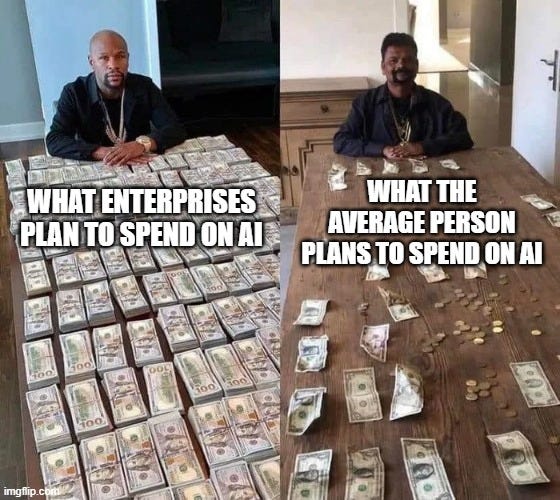
Because in the end, the freemium AI chat sits next to your work. It does not sit inside it. That’s the gap Anthropic was the first to solve.
The Sticking Effect of Cowork
It is still early days. New products/ models might change the landscape. Even now, Anthropic is struggling to maintain the quality of its models.
But there’s still a stickiness effect that will make it hard for people to switch.
Take me as an example. As soon as I moved to Claude Code, I built a personal OS, knowledge graph, multiple agents/ workflow processes, templates, etc. all using Claude Code and connected to my other tools (Obsidian, Granola, Google, etc.). It knows me, how I write, how I work and is configured to my needs. Could it improve? Sure. Am I willing to put in the work to reconfigure it? Maybe one day, but not when I’m busy.
And while content creators make their money on change and new features, real-life employees are busy, 100% of the time. They don’t have time to reconfigure.
As the playbook goes, once your team is embedded in a stack with set processes, the best model conversation becomes mostly irrelevant. Especially as all these enterprises have lined up to sign up for Anthropic’s Enterprise plans, running through tokens like nobody’s business.
So here is my prediction for the next two years:
Anthropic keeps the enterprise lead – Now that they are embedded, a marketing person doesn’t know the difference between a good model and the best model. As long as Anthropic keeps up with basic compute requirements, ships steady upgrades, and doesn’t break the embedded business model, they will maintain the enterprise clients.
OpenAI keeps running on the brand – Codex (built on GPT 5.5) is a great model. Not to mention, people still refer to AI chatbots as ChatGPT, even if they are using Claude, so OpenAI will continue growing on its brand awareness.
Google benefits even if nobody uses Gemini – They are one of the biggest institutional investors in Anthropic and are closely connected to the Claude product. So as Anthropic compounds, Google compounds on the back of it. Expect more cross-coordination and a potential niche of their Gemini model (maybe full-on for search amalgamation) rather than investment in it as a foundational one.
Open source will continue to grow, but narrowly – I’m considering building a local open source model. However, this isn’t realistic for most businesses or people who don’t even know how to access their terminal.
This is my thesis: the best model doesn’t win. The embedded one does.
I heard a great saying once: “Microsoft doesn’t win customers with its products. It wins them despite its products.”
Can Anthropic pull off the same? Who knows, but I know the embedded strategy is working for my non-data & tech friends.
One thing to note before I close off. All of this does not account for the fact that every AI foundational model/ company is losing money hand over fist right now, and who knows what the impact of standard economics will play into this race. Nick Zervoudis wrote an amazing piece on this, Vin Vashishta writes a great deal about this and both are worth checking out.
Thanks for the read! Comment below and share the newsletter if you think it’s relevant! Feel free to also follow me on Substack, LinkedIn, and Medium, or reach out if you are looking for some top-notch freelance consulting input! See you amazing folks next week!